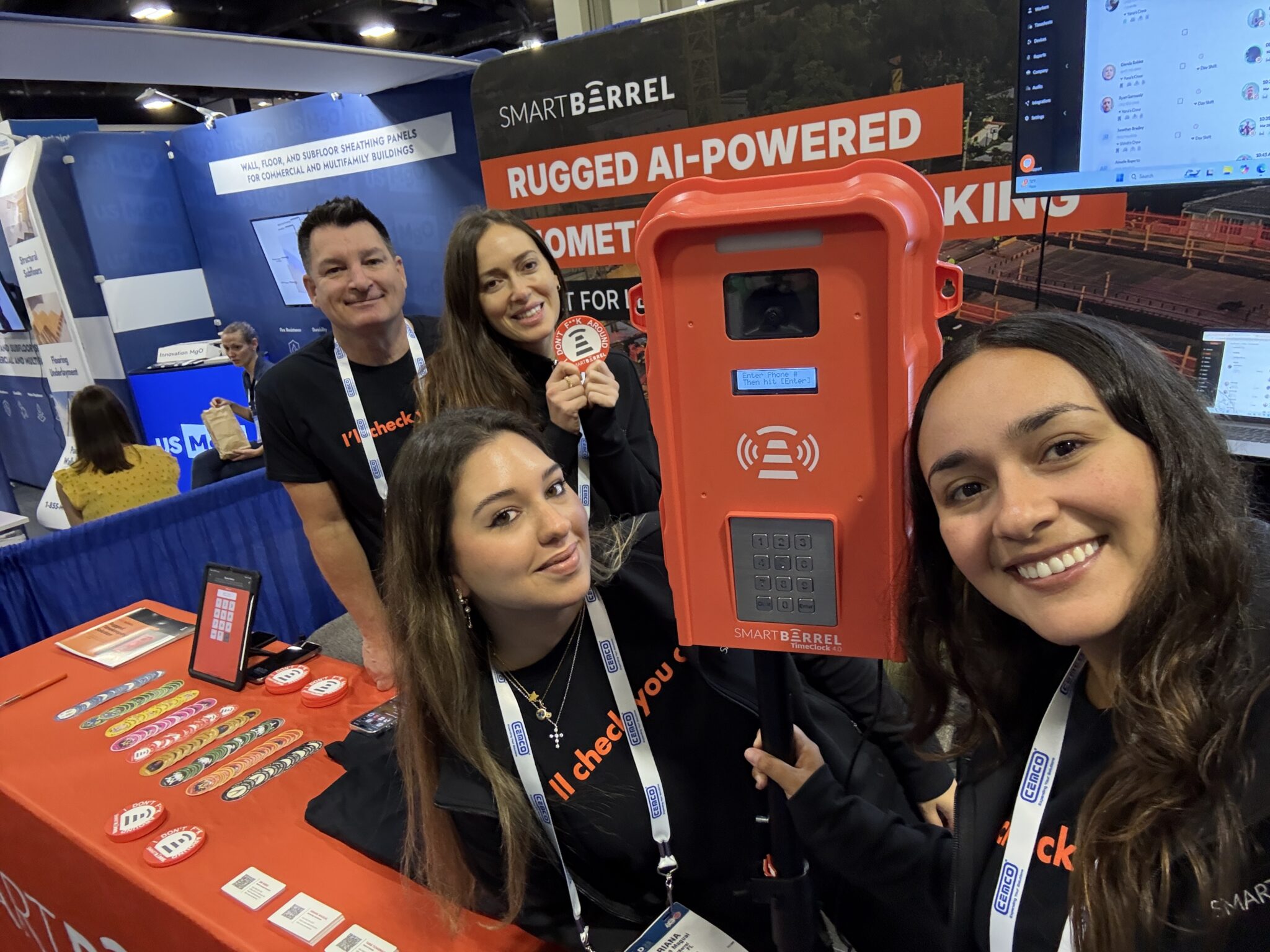
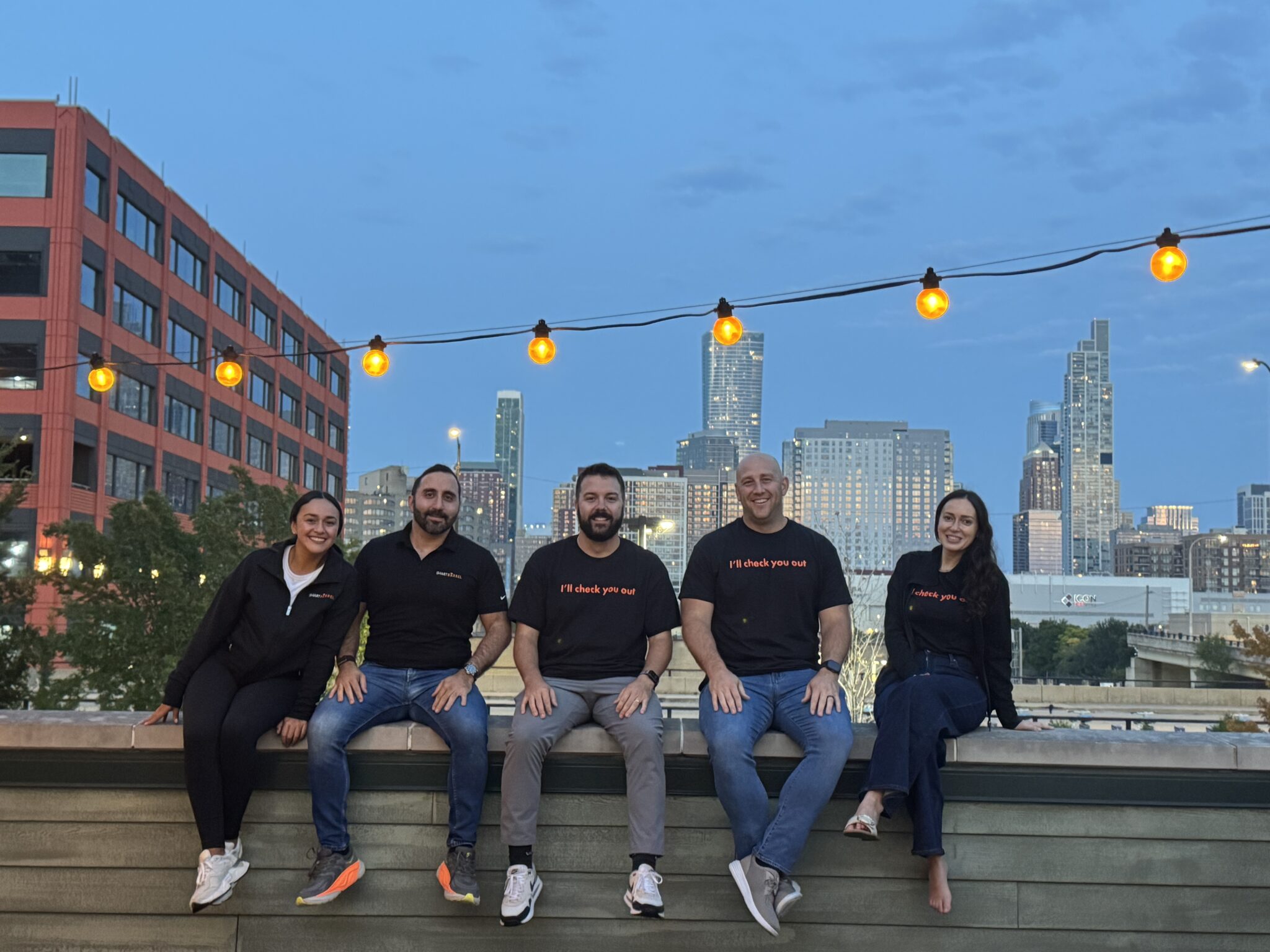
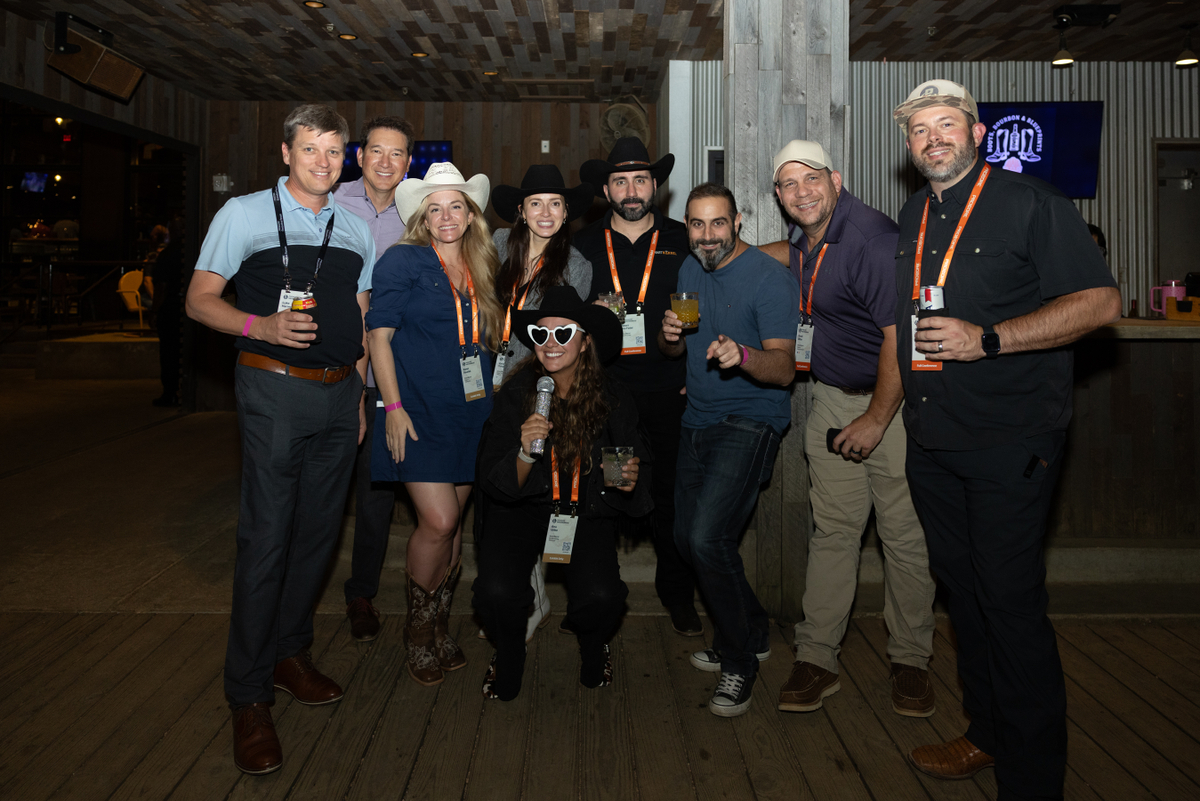
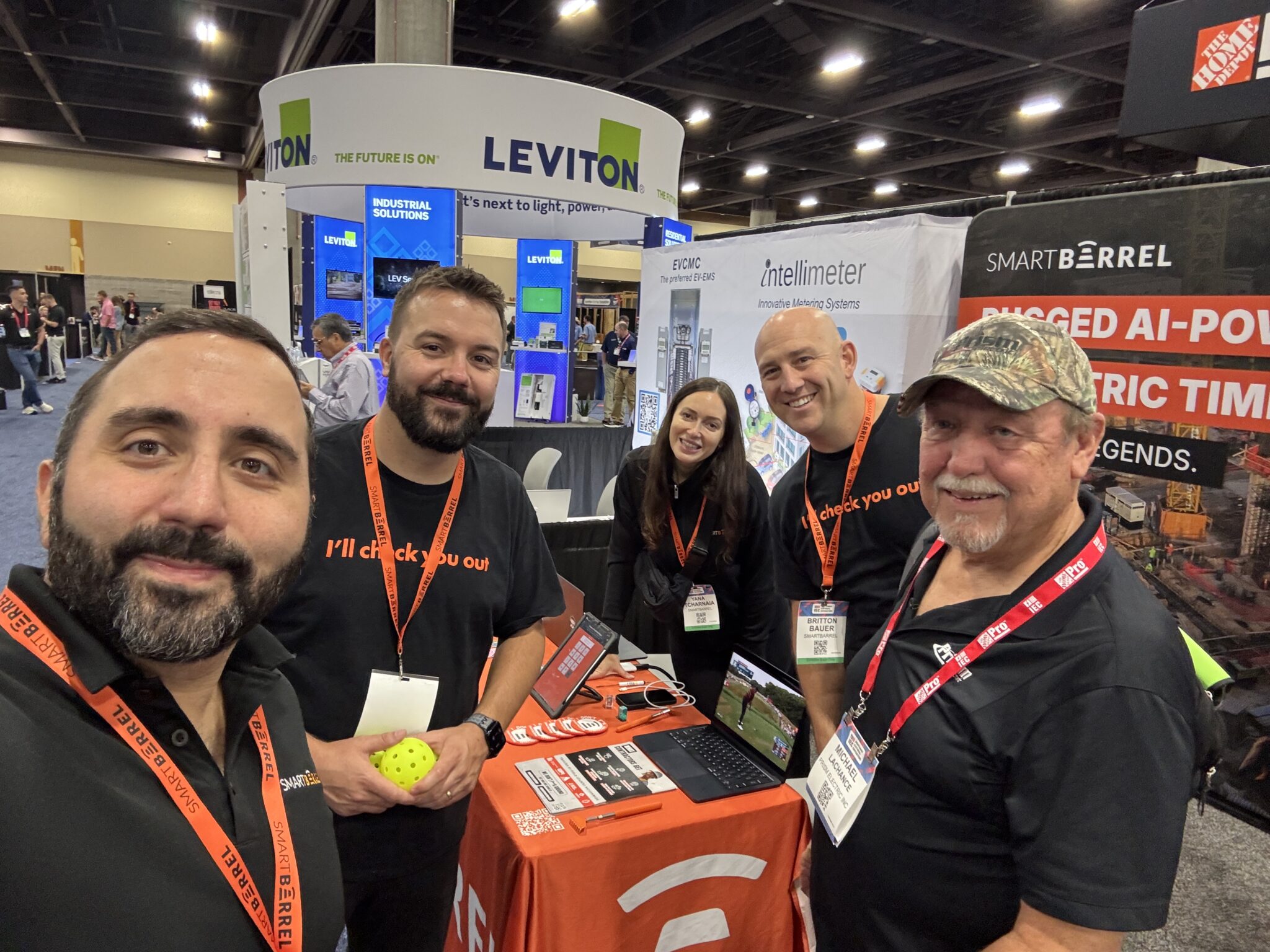
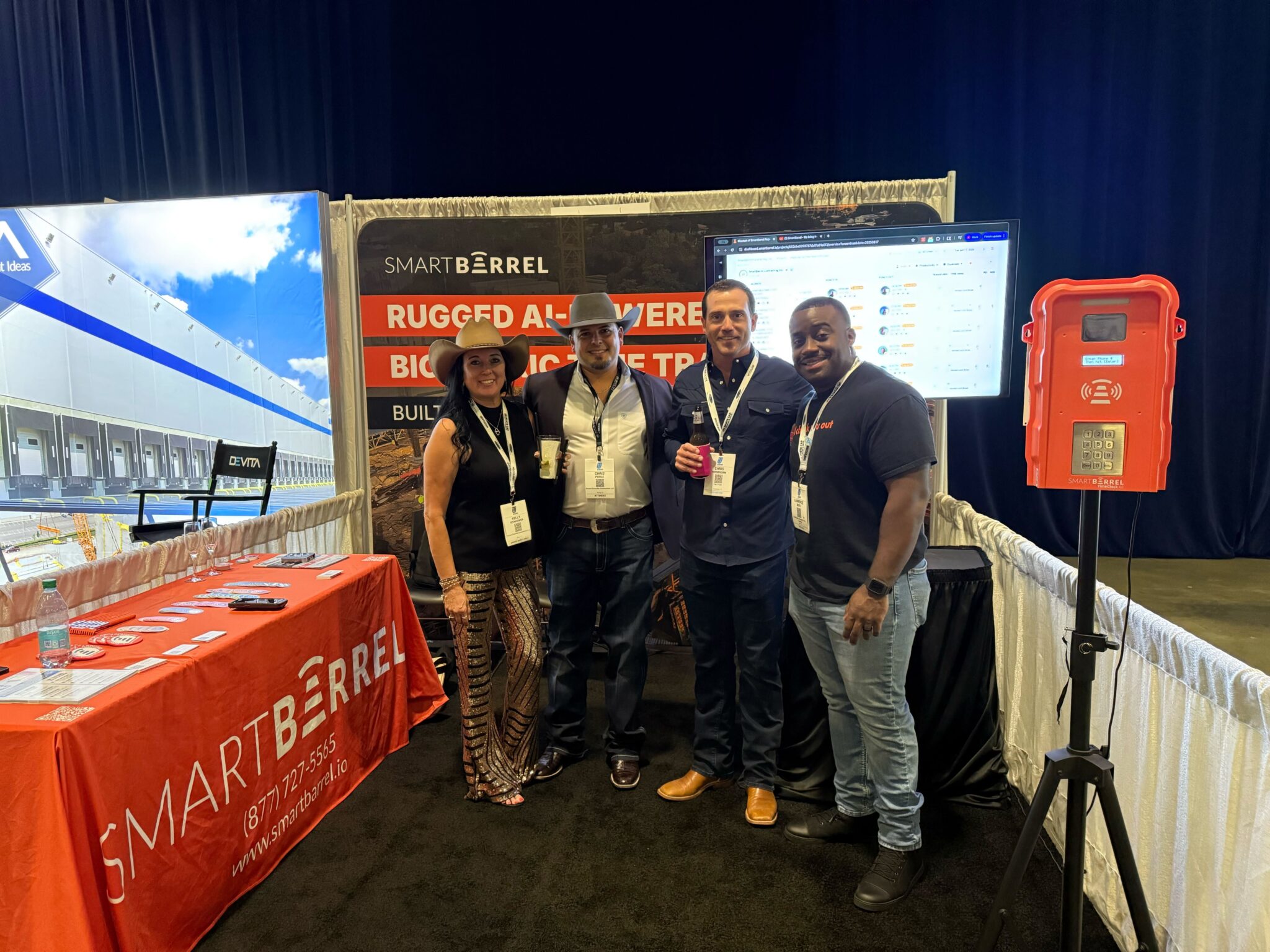
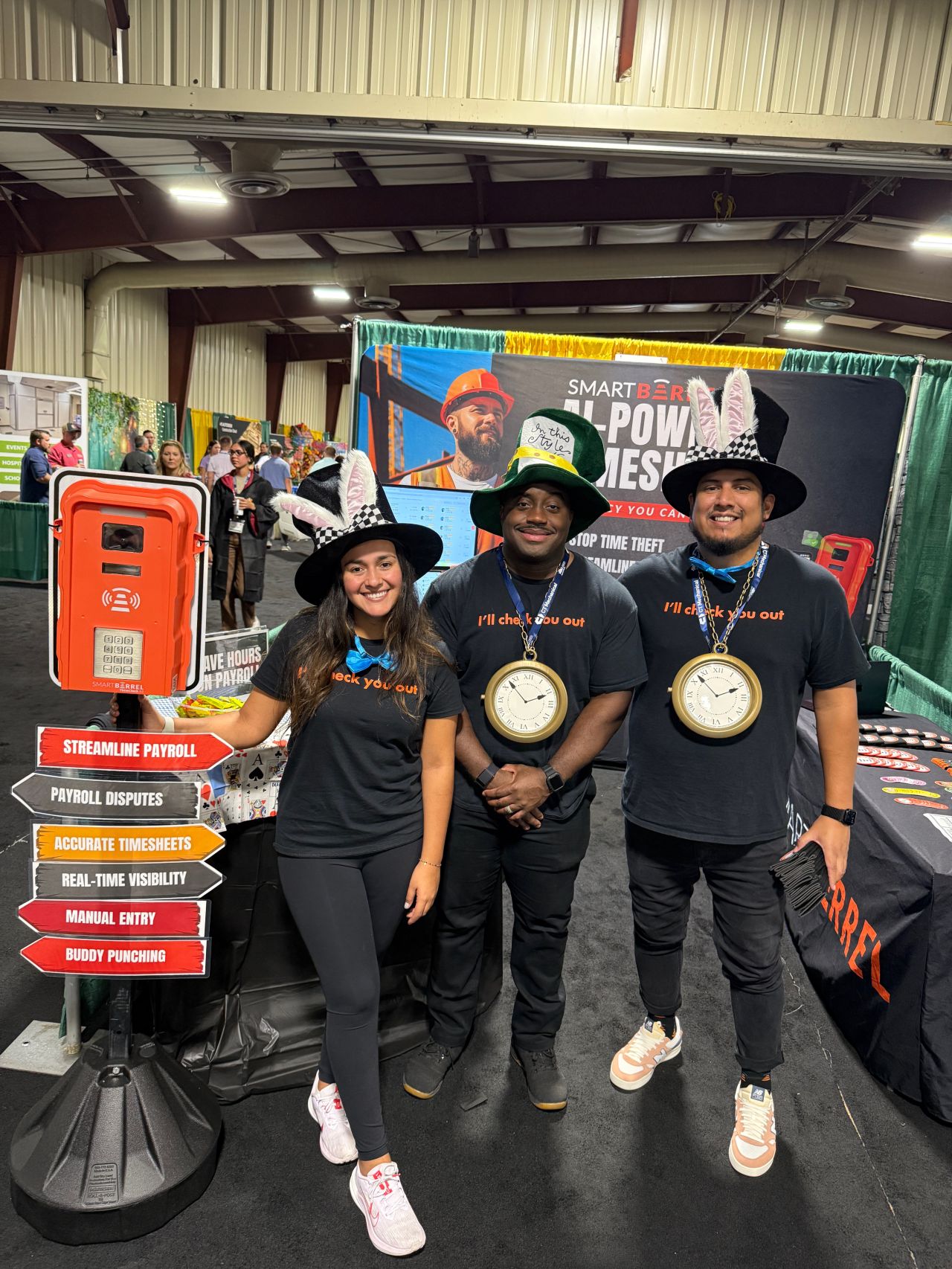
In life, when the need for something becomes imperative, you are forced to find ways of achieving it. This is exactly how SmartBarrel was born.
Albert Bou Fadel, founder and CEO of SmartBarrel, worked in construction for over 10 years. His last job in construction (before turning to Construction Tech) was a project manager for a Glass and Glazing Contractor in Miami, Florida.
Tracking worker time in construction is not an easy task. While most people assume this is because the construction industry isn’t open to tech, it’s mostly because the traditional methods just aren’t designed for our industry.
When Albert was managing multiple projects across Florida with over 300 workers across the job sites, he tried every solution for better time tracking, including mobile apps, fingerprint scanners, ID cards, and even went as far (and crazy) as iris scanners.
With every solution brought to the field, there was always an excuse not to use it:
- “I don’t have a phone”
- “My phone died”
- “There was no internet connection”
- “The fingerprint scanner didn’t recognize my finger with gloves on and the union told me I shouldn’t remove PPE”
- “I welded off my fingerprints”
- “No one registered my finger”
- “I stood in front of the Iris Scanner for 30 minutes and then punched the device and it stopped working”
The excuses never stopped.
Albert’s team finally settled on a fob in/out hardware solution which seemed like it would be the easiest to use. No one had to have a smartphone; a device was kept on site, and people had to just use their fobs to check-in/out. Finally, there would be no excuses.
Until one Friday, when Albert got a call from the GC yelling that there was no one from his team on the job site. He checked his time tracking app, where it showed he had 30 workers onsite.
Albert drove 3 hours to the job site, where he found one lone worker sitting on a bucket with a keychain full of key fobs.
Despite catching this individual in the act, labor laws prevented him from taking action because the time tracking system indicated that the employees were on site.
So Albert decided to build his own solution: a time clock designed specifically for the conditions of a construction job site. That meant it needed:
- A power source
- It’s own Internet connection
- An easy mounting system
- An intuitive user interface
- A verification method that actually worked on the job site