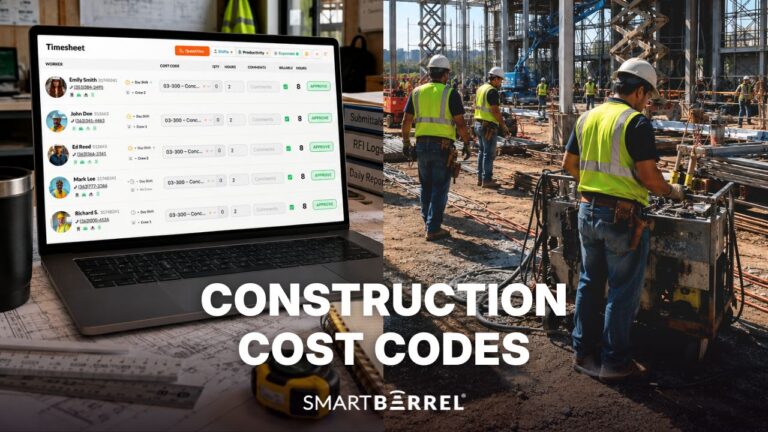


The growing progress of construction demands strong labor oversight to help teams meet project objectives. Modern technologies create a foundation for contractors to increase work output alongside safety measures while making all operations run better. Studies by Colorado State University’s Construction Management Department show how technology improves project work levels while defining new industry standards. For example, AI analyzes worker performance to identify inefficiencies, while wearable tech monitors health and safety, reducing risks and enhancing overall productivity on site.
Digital technology, combined with lean manufacturing methods—such as minimizing waste, optimizing workflows, and streamlining processes—has created major improvements in construction project management. Digital technologies, such as AI-driven project management tools, wearable safety devices, and real-time workforce tracking systems, have improved uptime and boosted worker performance, transforming how construction projects are managed.
Technology moves jobsite safety culture only when leadership acts on what it reports, rather than collecting the data and filing it.
These technologies help construction teams better allocate resources, track progress, and ensure safety, leading to more efficient and timely project completion. As contractors continue to adopt these innovations, they gain deeper insights into workforce productivity, making it easier to manage labor, optimize schedules, and reduce costly delays.
These developments set new industry standards by enhancing both construction efficiency and safety beyond current expectations. Advanced technology enables project leaders to complete projects more quickly and cost-effectively while improving build quality and environmental performance. By leveraging these tools, construction teams enhance communication, reduce errors, and improve task allocation, leading to smoother workflows, safer work environments, and higher overall productivity in the building sector.
Why Does Construction Labor Management Matter?
Labor management is what determines whether a project finishes on time, on budget, and at the quality clients expect. When coordination breaks down, communication gaps stall the schedule and pile on labor cost; when it’s strong, it protects both output and profit.
Project success in construction largely rests on how well companies manage their workforce throughout the whole industry. The process requires thorough workforce setup and ongoing evaluation to ensure work is completed on time with high-quality results.
Effective construction labor management involves planning beyond basic job assignments to guide workers efficiently through their tasks. Ensuring effective crew coordination is essential for meeting project schedules and budgets while also maintaining high-quality results throughout the construction process. When management systems fail to work properly, they let communication problems build up and projects stall, which creates extra labor expenses to hurt both contractor output and profits.
Labor management in construction involves more than simply assigning tasks; it also optimizes resource allocation, tracks worker performance, and ensures safety, leading to improved project outcomes. Effective management structures ensure project teams collaborate efficiently and allocate resources, such as labor, materials, and equipment, to the areas where they will have the most impact, improving workflow and minimizing delays. As a complete management system, the use of AI-driven project planning and real-time tracking helps resolve potential issues ahead of time, ensuring steady project progress. Good labor organization lets construction managers create better workforce plans that both boost productivity and suit financial limits and project needs.
Jobsite safety checks are where that responsibility becomes concrete, since they document conditions on a fixed schedule instead of relying on who happens to notice.
Effective labor planning and control play a crucial role in construction management success. Efficient workforce management improves project outcomes, boosts success rates, and builds client trust in a competitive industry. When project teams collaborate under strong leadership, they align efforts toward shared goals, enhancing overall project performance. Proper labor management not only leads to better results but also optimizes resource use and increases profits.
Construction workforce optimization puts that principle into daily practice, using verified hours and headcount to decide where each crew goes next.
How Does Technology Improve Construction Labor Management?
The core shift is moving work off people and onto systems. Automation runs routine scheduling and data entry, while live performance data lets managers catch delays and adjust before they turn into cost.
Advances in construction labor management technology improve project workflows by automating scheduling, optimizing resource allocation, and tracking performance metrics, leading to more efficient project execution and better overall results. By using modern tools, workforce management and communication tasks can be automated, eliminating manual processes that slow down operations and improving overall efficiency.
The construction industry today achieves better performance by using automated systems to run essential tasks. Modern construction needs tools that automatically manage resources while keeping track of employee performance and making project adjustments instantly. When automation technology, such as AI-driven scheduling and robotic process automation, takes over manual tasks, it streamlines operations, reduces downtime, and speeds up workflows, leading to higher productivity and fewer disruptions.
Data analysis gives construction managers powerful ways to track worker performance and handle resources better. Using these insights, construction teams can avoid unnecessary delays and deliver quality work on schedule and within budget.
Technology integration in construction labor administration helps make operations run smoother and delivers better visibility into accountability and transparency. Construction project leaders can monitor workforce attendance and project details instantly by using biometric and mobile tracking tools together with cloud storage solutions.
With AI analytics and wearable tech, performance trends are tracked by monitoring factors such as work speed, task completion rates, and physical activity levels. This data allows project leaders to identify delays, optimize workflow, and ensure workers are adhering to safety protocols in real-time. The new systems help managers spot problems early to keep projects on schedule.
The construction industry benefits from modern technology because it fixes common management problems, which helps contractors reduce labor expenses and work more efficiently. Technology gives construction managers the advantage they need to build powerful teams that will accomplish project goals and sustain future success.
Which Tools And Technologies Are Reshaping Labor Management?
Most of the gains come from a few connected technologies, each built around verifying who is on site and turning that into usable data.
Technology | What it does for labor management |
Biometric time tracking | Confirms each worker’s presence before clock-in, preventing buddy punching and streamlining payroll |
Geofencing and location tracking | Verifies in real time which crews are on which jobsites, logging time only inside site boundaries |
Cloud workforce platforms | Collect hours, performance, and safety data and deliver it to managers in real time for quicker decisions |
AI analytics and wearables | Flag performance delays and monitor safety metrics to optimize labor allocation and protect workers |
SmartBarrel uses AI-powered biometric facial verification to accurately verify worker presence. This system prevents buddy punching by ensuring that each worker’s presence is confirmed before clocking in, eliminating the possibility of one employee punching in for another.
SmartBarrel combines AI analysis with wearable technology to enhance both employee efficiency and workplace safety. The AI system evaluates work trends and identifies performance delays, helping contractors optimize labor allocation. Wearable devices track employee activity, while SmartBarrel’s analytics tools monitor safety metrics in real-time, ensuring compliance with safety requirements and protecting employees from potential accident risks.
Geofencing ensures time records are only logged when workers are within designated jobsite boundaries. Combined with SmartBarrel’s biometric verification, this prevents time fraud and ensures accurate workforce tracking.
What Are The Benefits Of Technology In Labor Management?
The returns show up across the whole build, from day-to-day crew productivity to final project delivery:
Benefit | How technology delivers it |
Workforce productivity | Automates repetitive tasks and tracks work instantly, freeing teams for core project duties |
Accountability and transparency | Biometric verification and geofencing tie attendance to performance in one reliable record |
Cost optimization | Wearable data and AI analytics expose idle time, inefficient routes, and unsafe behavior that waste labor cost |
Project management | Digital platforms build schedules and resource plans that update instantly as the project changes |
Safety and compliance | Wearable sensors detect hazards and send real-time alerts, while tools simplify regulatory reporting |
Sustainability | AI resource planning, efficient machinery, and smart sensors cut material waste and emissions |
Project outcomes | Streamlined scheduling, automation, and real-time tracking keep projects on budget and on deadline |
Technology supports labor management across the project lifecycle:
- At the start of a project, digital tools enable better scheduling and budgeting.
- During execution, they enhance productivity, monitor safety, and reduce delays.
- Upon completion, they provide accurate reporting and financial oversight.
By adopting these innovations, construction professionals improve reliability, complete projects faster, and enhance their market position, attracting more customers and business opportunities.
What Challenges Come With Implementing New Technology?
The biggest barriers are people and money. Workers resist tools they don’t understand, legacy systems resist new ones, and upfront cost can hide long-term ROI, so adoption depends as much on training and culture as on the technology itself.
New technology systems provide many construction labor benefits but create obstacles during their installation. New technology faces difficulty during implementation due to organizational resistance and unexpected costs, which slow down projects and require additional budget.
Employee training and adoption
New technology implementation meets powerful employee opposition as its biggest barrier. New systems make workers nervous because they think the technology will make their jobs harder and put their positions at risk. Staff usually push back against new technology because they neither understand its functions nor see how it helps.
Effective training is essential to ensure teams understand both how to use new tools and the daily advantages they provide, leading to smoother adoption and improved productivity. When contractors develop their staff alongside new technology, they create better acceptance and support from the workplace. Better training should include hands-on practice that shows employees realistic technology used to lower their fears while building their acceptance.
Integration with existing systems
Bringing new technology into use with current old systems creates tough problems for businesses. Old contractor systems run the business core and may resist working together with new technology at first.
Successful integration requires flexible technology solutions that connect with existing systems, ensuring compatibility and minimal disruption.
The process must begin with a thorough evaluation of existing and new systems to identify key integration points and potential challenges, such as:
- Data compatibility issues
- Software interoperability
- Employee training needs
- Cybersecurity risks
Using adaptable software platforms that integrate with existing systems simplifies transitions and prevents work interruptions.
Managing initial costs
The upfront expenses of technology installation seem overwhelming for many contractors. Construction contractors struggle with traditional budgeting methods that focus on upfront costs rather than long-term financial benefits. These methods often fail to account for savings from automation, reduced labor costs, and lower material waste. To address this, budgets should incorporate lifecycle cost analysis (LCA) and total cost of ownership (TCO) assessments to highlight the long-term ROI of new technology investments.
An evaluation of technology’s long-term savings benefits helps organizations manage initial expenses by demonstrating how automation minimizes material waste through precise resource allocation, predictive maintenance prevents costly equipment failures, and real-time monitoring optimizes energy consumption, ultimately reducing operating costs.
A detailed investment report should include key financial metrics such as:
- ROI (Return on Investment)
- Cost savings from automation
- Reduced labor expenses
- Improved project completion times
- Long-term maintenance cost reductions
These metrics help funders see the tangible financial benefits of their initial investment. Studying available government funding or financial support options for technology investment makes it easier for firms to purchase these necessary solutions without initial financial burden.
Strategic planning for technological upgrades
Construction contractors must properly plan their technology initiatives to make labor management systems work well. Having a complete plan with set time steps and detailed budget plans leads directly to successful results. Organizations must continuously assess their approach to keep up with advancements in automation, AI-driven project management, sustainable building materials, and evolving safety regulations. Monitoring trends like modular construction, real-time data analytics, and compliance updates ensures efficiency and competitiveness in the industry.
Fostering a culture of innovation
To make technology work properly in construction management systems, contractors need to switch to an innovation-friendly culture. Construction contractors should develop work settings that treat technological progress as a tool to help their teams improve and create value. Fostering an innovative mindset means encouraging idea-sharing and recognizing valuable contributions. Acknowledging and rewarding technological advancements motivates workers to explore new solutions, driving continuous improvement and efficiency in construction.
Get Control of Your Time Tracking
Future Trends in Construction Labor Management Technology
Five technologies are set to shape the next phase of labor management:
Trend | Expected impact |
AI and predictive analytics | Forecasts project risks and workforce demand before they hit, keeping projects on schedule |
Automation and robotics | Handles repetitive and hazardous tasks like bricklaying, welding, and demolition, cutting delays and injury risk |
Blockchain | Creates a tamper-proof ledger of hours, contracts, and payments, reducing disputes and payroll fraud |
VR and AR | Trains crews in safe simulations and overlays digital data on the real jobsite to catch problems early |
Advanced and smart materials | Self-healing concrete and embedded sensors reduce inspections and repairs, freeing workers for higher-value tasks |
Construction labor management technology will create a smarter construction industry through new tools that benefit both productivity and workplace safety. These emerging technologies will revolutionize construction practices by enhancing compliance with industry standards such as OSHA safety regulations, fair labor tracking, accurate payroll reporting, and data-driven workforce management.
What’s The Takeaway For Contractors?
Pairing biometric verification, AI, and wearables removes buddy punching and time theft, sharpens labor tracking, and speeds up payroll, which lowers cost and strengthens project results.
New technology tools drive major improvements in construction labor management systems that make teams work smarter. By integrating biometric technology, AI, and wearable devices, construction managers can eliminate buddy punching, reduce time theft, improve labor tracking accuracy, and streamline payroll processing, leading to enhanced workforce efficiency and cost savings.
These improvements enhance efficiency by reducing errors and ensuring accurate time tracking, fostering trust between employers and employees through transparent and verifiable records. When contractors put these technologies to work, they achieve better building results, which helps them perform well in the markets in which they compete. The available tools help organizations make quick choices and handle labor data properly to successfully complete modern construction projects while delivering superior client outcomes.
SmartBarrel’s AI technology prevents time fraud by eliminating unauthorized clock-ins and streamlining workload management. The system helps construction managers access important workforce details, which improves how they get work done and run projects better.
Do you want to discover how AI-powered technology can change your time management? Schedule your demo with SmartBarrel today and discover how SmartBarrel’s advanced solutions can improve your timekeeping process.
Technology & Construction Labor Management: FAQs
What technologies help reduce administrative burden in labor management?
Digital tools automate tasks like time entry, payroll data collection, compliance reporting, and shift scheduling. By eliminating manual data entry and paper forms, teams spend less time on administration and more time on core construction activities. This improves accuracy and frees up management capacity.
What role does automation play in labor compliance?
Automation can enforce rules around breaks, overtime eligibility, and certified training requirements. By embedding compliance logic into workforce systems, companies reduce the risk of labor violations and ensure consistent enforcement of policies. This simplifies audit preparation and reduces legal risk.
Can labor management technology improve worker retention?
Yes. Tools that provide clear schedules, simple communications, and timely payroll help reduce frustration and uncertainty among workers. When labor feels accurately compensated and well-managed, job satisfaction tends to improve. This supports retention in a competitive labor market.
How does construction labor management technology reduce labor disputes?
Construction labor management technology creates a verifiable record of hours worked, job assignments, and pay calculations. When data is transparent and time-stamped, disagreements over payroll, overtime, or jobsite attendance are easier to resolve. Clear records reduce friction between workers, supervisors, and payroll teams.
How does construction labor management technology support better decision-making?
Accurate, real-time labor data allows managers to identify trends in productivity, overtime usage, and cost performance. Instead of relying on delayed reports or estimates, decisions can be made using current field information. Better data leads to faster adjustments and stronger project outcomes.