

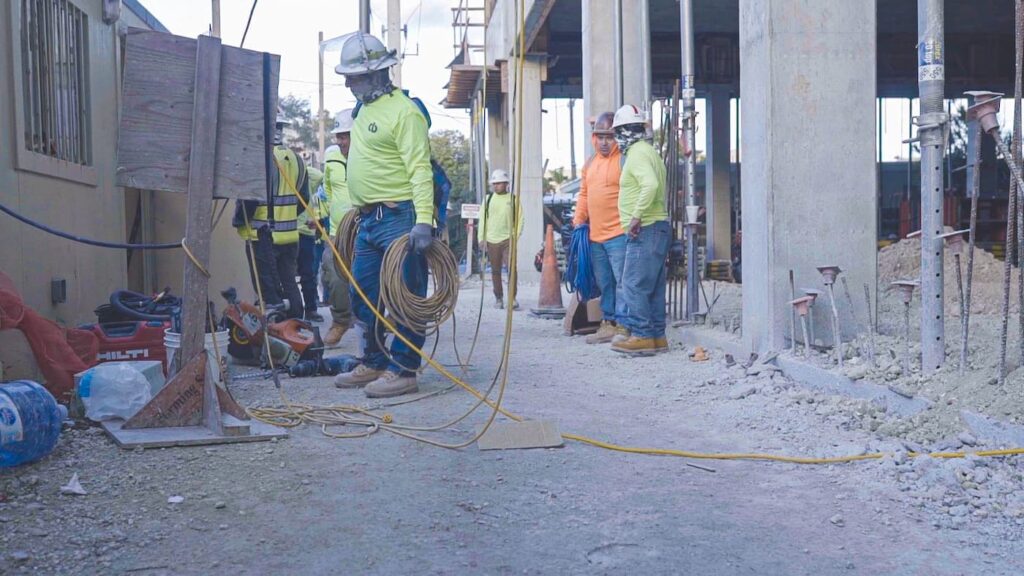
Labor costs are the wages and expenses tied to the workforce on a construction project. According to the National Association of Home Builders (NAHB), labor represents about 30% to 50% of the total costs of a construction project, making them one of the most significant factors in any project’s budget.
Labor costs could go out of hand if they are not adequately monitored, impacting the bottom line of the business and project deadlines. For instance, a mechanical subcontractor in one project had labor costs 25% higher than previous expectations, later manifested in decreased productivity, overtime work, and idle periods — issues that are usually encountered in the construction sector. Small inefficiencies can become a serious waste of time and money.
Most of those inefficiencies trace back to how hours get captured, which is why contractors who want to control labor costs from the field start there instead of at the budget review.
The same percentage drift costs far more on self-performed scope on mission-critical work, where a single trade may carry tens of millions in labor.
For this reason, effective labor management is essential. It helps maintain profitability while achieving project goals. Labor cost control starts with a reliable construction time tracking system that shows you exactly where every hour goes before it hits payroll.
If you’re cutting labor costs across multiple projects, allowances matter; this breakdown of per diem in construction helps you avoid preventable payroll leakage.
Understanding Labor Costs in Construction
Labor costs in construction fall into two primary categories:
Labor Cost Type | Definition | Examples |
Wages paid directly to workers contributing to physical construction | Carpenters, electricians, plumbers, and other skilled tradespeople | |
Indirect labor costs | Non-direct construction expenses not tied to a single project | Office staff, administrative support, training programs |
Effective labor cost management requires precise labor cost tracking methods. This is due to distinguishing between direct and indirect labor costs, especially given the fluctuating demands of jobsites and varying labor laws.
How Does Accurate Time Tracking Reduce Construction Labor Costs?
An essential element in managing labor costs is tracking time efficiently and accurately. Accurate records of working hours can minimize excessive working hours and idle hours expenses. According to the National Institute of Standards and Technology (NIST), ineffective time management causes 10-20% more expenses due to the labor costs.
Through a collaboration with a time-tracking specialist, the construction companies could be equipped with effective means to gather data about productivity, detect different problems, optimize resource allocation, and eventually, cut labor costs.
What Are The Benefits Of Partnering With Construction Time Tracking Experts?
A robust time-tracking system goes beyond increasing efficiency. It assists subcontractors in tracking and controlling labor costs and even reducing their workforce, thus saving them a lot of money. By partnering with time-tracking experts, contractors gain access to valuable expertise, advanced tools, and best practices.
According to a Harvard Business Review survey, the US economy loses $7.4 billion every day because employees do not clock in. Clocking in the poor performance of employees track their working hours, this will result in underpayment or overpayment which in turn can bring about discontent among employees, employee relations litigation or excessive labor costs.
Besides, the lack of correct time records denies the production check, hence the company is unable to identify the dead time or completion delays that contribute to higher project costs. Once you can validate hours, the next step is proving performance, this productivity tracking software guide explains how to measure earned vs. burned hours.
If you’re budgeting for durable hardware, our top 5 portable construction time clocks can help you compare cost vs. value across rugged devices.
One more effect of this situation is the management of labor distribution not being efficient as the supervisors are not equipped with the necessary data to avoid overstaffing, understaffing, or unnecessary overtime.
Knowing the overtime pay rules that apply to each project, especially when crews cross state lines, is the first step toward keeping that spend intentional rather than reactive.
Premium pay tied to real hours is also the number that determines what a worker can claim on next year’s return, so getting the rate right protects the crew as much as the budget.
Moreover, enforcement of labor laws often obligates the presence of work hour records that are clear enough, therefore failure to do so gives rise to the legal penalties, fines, and reputation damage problems.
Missing clock-ins five times also creates the data gaps which affect the accuracy of budgeting and decrease the chances of improving operations. Cooperation with time-tracking experts ensures that these inefficiencies are minimized through automated tools and best practices, thus, accuracy, compliance and profitability are finally improved.
Here’s how time-tracking experts can help:
Benefit | What It Delivers |
Identifies tasks taking longer than expected; gives employees visibility into workloads and productivity patterns | |
Higher accountability among employees | Employees who log time tend to be more attentive; recorded timesheets help identify and minimize wasted time |
Better billing and efficiency | Tracks time spent on client work for accurate billing; more billable hours contribute directly to company profits |
Know where resources are needed most | Reveals whether departments need additional staff or if workloads are unevenly distributed |
Track your budget in real time | Costs are calculated instantly as timesheets are completed, eliminating additional budgeting processes |
What contractors often miss is that the real labor cost per hour is rarely the wage on the paystub, since taxes, insurance, and benefits push the actual figure 30 to 40 percent higher.
Get Control of Your Time Tracking
How Does Smartbarrel Help Reduce Construction Labor Costs?
SmartBarrel is a revolutionary time-tracking software developed for the construction trade industry. The system’s ability to track time through biometrics and location makes labor utilization easy and efficient. Here’s how SmartBarrel makes a difference:
Precision Time Tracking
With AI-powered biometric verification, only the right team members clock in—no more buddy punching or time theft. By locking down actual hours worked, you keep labor costs tight and payroll accurate. Automating your construction time tracking system means faster, hassle-free clock-ins, giving everyone more time to finish the real work.
For contractors working across multiple sites, a magnetic-mount time clock that’s portable, weatherproof, and self-powered makes it simple to deploy accurate time tracking wherever crews are working.
Geo-fencing Capabilities
Geo-fencing only allows employees to clock in when they are physically on-site, reducing time theft and cutting labor costs by ensuring that only actual worked hours are logged. This improves efficiency and streamlines payroll, which helps companies save on unnecessary labor costs.
Geo-fenced check-ins and biometric verification work best together, since each one closes a different gap in time theft prevention that the other cannot cover on its own.
Data-Driven Insights
By accurately tracking labor hours through a biometric time-tracking system, SmartBarrel gives you a clear picture of where time and money might be slipping away.
With these insights, companies can make smarter calls and keep labor costs under control. It’s data that doesn’t just track time. It drives impact.
That is also what separates a labor cost tracking system from a basic time clock: the hours feed straight into cost reports by job and phase, not just a payroll total.
What Strategies Help Contractors Implement Effective Time Tracking?
Implementing time tracking as a solution is a complex process. Specialty contractors should consider the following strategies to maximize efficiency and reduce labor costs:
Choose the Right Technology
Choosing a precise time tracking tool like SmartBarrel for the construction business guarantees precise data capture. The benefits include biometric authentication and geo-fencing. These two top features yield accurate automated time logs integral to managing labor expenses.
Train Workers
According to PMI, the efficiency of projects can be increased by 20% due to practical training. Getting employees involved early is an essential part of implementing a new system.
SmartBarrel implementation is fast and straightforward, so teams can jump right in. Setting up the SmartBarrel time clock takes no technical experience, and all workers need to get started is a phone number and a quick picture.
Integrate with Payroll Systems and ERPs
Connecting your time-tracking system with payroll helps eliminate manual hours-to-pay processing and cuts out payroll headaches. SmartBarrel seamlessly links with Procore, CMiC, Sage, and more. With real-time, accurate data flowing effortlessly to your payroll team, you can reduce errors, boost cost control, and keep operations running smoothly.
Regularly Review Labor Data
Regular collection and analysis of labor data enable the project manager to recognize productivity trends, define bottlenecks, and manage staffing resources effectively. Such findings give ideas on how to cut costs, for instance, by reducing working hours and redistributing the workforce to increase productivity and decrease project costs.
Your ERP can’t help you if the data feeding it is wrong. Learn how construction cost tracking systems should actually work.
What Are The Long-Term Benefits Of Reducing Construction Labor Costs?
The benefits of investing and managing labor costs are more than just short-term. Interestingly, specialty contractors can benefit from sustainable changes in the delivery of projects, the morale of employees, and profitability. Let’s explore these benefits:
Increased Budget Flexibility
Cutting labor costs means that funds otherwise used to cover this cost can be channeled to other productive uses, like acquiring equipment or expanding the docket of projects. This flexibility gives specialty contractors an advantage, enabling them to bid for more complex projects.
Enhanced Workforce Efficiency
When specialty contractors cut labor costs by managing time more effectively, they can invest wisely in the employees, making their workers more efficient. Team management reduces time wastage, increases quality, and creates a healthy workplace.
Improved Project Delivery and Client Satisfaction
Control of labor costs helps achieve project milestones on schedule and deliver projects that meet clients’ quality and timely delivery expectations. To establish a reputable company, every specialty contractor wants to satisfy their clients as much as possible.
Accurate labor data is the foundation of effective construction job costing. Without it, you’re building financial reports on guesswork.
Frequently Asked Questions
What factors affect labor productivity and costs in construction?
Labor productivity in construction is influenced by multiple interrelated factors, including crew size and composition, skill levels, supervision quality, work sequencing, material availability, equipment readiness, site access, and environmental conditions. When any of these factors are off, costs follow. Accurate time tracking gives project managers the data to spot where productivity is slipping before it affects the budget.
How do you calculate labor burden in construction accounting?
Labor burden is the true cost of employing a worker beyond their base wage. It includes payroll taxes, workers’ compensation insurance, benefits, paid time off, and job-specific expenses like safety training or PPE. The burden rate typically ranges from 30% to 40% on top of base wages, though it can be higher for union contractors. To get the fully burdened rate, add all those indirect costs to the base wage and divide by total hours worked.
What is the difference between union and non-union labor costs in commercial construction?
Union workers carry higher wages and benefits upfront, but the gap narrows when you factor in productivity. A study of 1,550 projects found that union mechanical contractors were 15% more productive than non-union contractors, resulting in 4% lower total project costs despite higher wages. For non-union contractors, employment costs typically add 24% to 33% on top of base wages. For union contractors, that range runs from 60% to 70%. Either way, accurate time tracking is what ensures those hours are recorded correctly.
What are labor costs for specialized trades such as electrical, plumbing, and HVAC?
Base wages vary by trade. According to Payfactors data, median entry-level salaries in 2025 were $60,600 for electricians, $53,900 for plumbers, and $54,100 for HVAC technicians. But base wages are only part of the cost. When you add taxes, insurance, and certification requirements, burden rates for electricians typically run 42% to 52%, and for HVAC technicians 45% to 55% of base wages. For contractors managing crews across these trades, capturing accurate hours at the jobsite is the foundation for keeping those costs under control.
Conclusion
Specialty contractors can work closely with a time-tracking expert like SmartBarrel to make the necessary changes to avoid excessive labor costs negatively affecting the project budgets. SmartBarrel is an accurate, reliable, and easy-to-use product that uses AI biometric tracking and geo-fencing for construction timekeeping needs. Are you interested in specialized technology and successful strategies to help manage labor costs, increase efficiency, and guarantee sustainable development? Learn more and book your demo right now!