

As the demand for housing and commercial properties increases, the labor shortage in the construction industry is ever more apparent.
The construction industry has been grappling with a labor shortage problem for over a decade. Still, as the number of projects increases across all states every year, companies are struggling more and more with the difficulty of finding skilled workers to occupy vacancies.
So why is there a construction labor shortage? What are the ramifications, and what can you do to deal with the industry’s lack of readily available labor? Here’s how to adapt, and how the SmartBarrel device can help your company curb its effects.
What’s causing the construction labor shortage?
Along with balancing costs, labor availability proves to be one of the most prevalent issues for builders and contractors across the United States. By understanding the causes, companies struggling with recruiting and retaining qualified workers (whether hourly or salaried) can carry out solutions to address it.
Cause | What’s Driving It |
Workers reaching retirement age | Over 30% of construction laborers in 2021 were between 45 and 64 years old. Many within the next decade are expected to retire, leaving significant gaps in skilled and management roles |
Inability to attract young workers | Young workers are opting for engineering, technology, healthcare, and social services. Schools have placed less focus on skilled trades and more emphasis on four-year degrees |
Recessions | The Great Recession in 2008 saw a loss of as many as 630,000 construction workers. The COVID-19 pandemic further worsened the shortage, with construction having one of the highest COVID-positive rates of any industry |
What’s the result of the construction shortage?
Especially due to the COVID-19 pandemic, worker loss has caused widespread disruption across the industry:
- Scheduled project delays have increased as buildings take longer to be completed, with some projects canceled altogether
- Companies have been unable to accept newer projects due to insufficient available labor
- Workers already in the industry have been overworked filling the labor gap, resulting in burnout and a decrease in quality of work
- Some companies have hired lesser-skilled or inexperienced workers, increasing safety hazards and the risk of costly mistakes
What can be done to curb the construction labor shortage?
Here’s what you can do to circumvent more pressure being placed on your already understaffed workplace, prevent decreasing the quality of your hired workers, and accomplish more with less labor.
1. Modernize your jobsite
The simplest way to make the most of your existing workforce is to invest in new technology.
Making the jobsite more efficient with more advanced systems eases the labor burden for workers on and off the field, speeding up production, reducing costs, and contributing to a more comfortable work environment, which can help with worker retention.
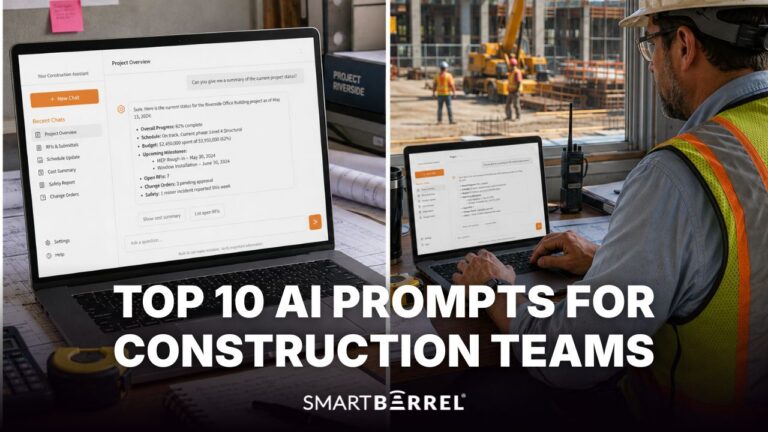
Using gadgets like the SmartBarrel device to collect and manage data decreases paper waste, increases accuracy, and lets you do more with fewer resources since it automates processes and frees up labor for more important tasks. It essentially streamlines core operations, increasing overall productivity.
Various workplace planning and resource management tools can also provide valuable insights, such as profit margins and workforce utilization rates. Machine-generated analytics can assist you in making more informed business decisions in labor-management, helping you deal with the construction industry labor shortage.
The best construction technologies will ideally:
- Improve communication between teams, so they spend less time waiting around for updates,
- Reduce unnecessary downtime, and
- Increase worker safety through personal protective equipment verification.
Not only can implementing the right technology have a dynamic impact on jobsite efficiency, but modernization also lets you attract younger, tech-savvy talent by demonstrating a willingness to adapt and change.
2. Invest in your workers
Once you have good workers, it’s important to retain them since high turnover rates can be damaging to profits and remaining employees. This also helps you combat the labor shortage in the construction industry.
Placing more priority on developing a company culture increases engagement from workers, incentivizing them to stay. This can include regularly asking for feedback and encouraging team members to give opinions, voice their concerns, and recommend improvements.
It’s also important to reward workers and give positive feedback whenever possible to promote your company’s values and improve team morale.
Offering your workers better wages and benefits (such as health insurance and company perks) makes your company more attractive, allowing you to stand out from other construction firms competing for high-quality candidates.
Giving workers opportunities for growth and offering rewarding work can instill a sense of loyalty. Consider investing in further training and continuing education courses to help employees develop valuable skills that they can contribute to the workplace.
3. Diversify how you’re attracting talent
Combat the construction labor shortage by branching out for recruitment.
Apprenticeships, internships, and student positions
Apprenticeships have traditionally been a pathway to a career in construction, and they’re definitely on the rise in the United States. Companies offering comprehensive apprenticeship programs have an edge on competing firms in attracting new workers.
Investing in programs that prioritize passing on knowledge and utilizing a combination of field training and classroom learning shows that companies have something to offer prospective employees. It gives them the opportunity to advance their trade and polish their professional skills.
You can also offer paid internships, co-ops, and student positions to college, trade school, and high school students. It’s not uncommon for companies to set up training programs with educational institutions.
Veterans and former military
Consider offering training opportunities to veterans and former, recently-returned members of the military. They’ll likely be looking to transition to civilian life by beginning a new career, making a position in the construction industry ideal.
Target workers from different sectors
The natural desire for career development can help you attract workers from other sectors. You may find luck recruiting focusing on industries with transferable skills, emphasizing meaningful, rewarding, and hands-on employment.
Frequently Asked Questions
What is a labor shortage in construction?
A labor shortage in construction occurs when the number of available skilled workers is insufficient to meet the demand for projects. The construction industry has been grappling with this problem for over a decade, with companies struggling more and more to find skilled workers to occupy vacancies as the number of projects increases across all states every year.
SmartBarrel, the solution to the construction industry labor shortage
Struggling with the construction labor shortage? Proper resource management can lessen its impact, with tools and software increasing efficiency to improve productivity and prevent delays. With fewer hands on-site, automating tasks and processes can help immensely.
The SmartBarrel device assists you with construction labor management, offering top-of-the-line features and integrations to lessen the burden.
General contractors benefit from:
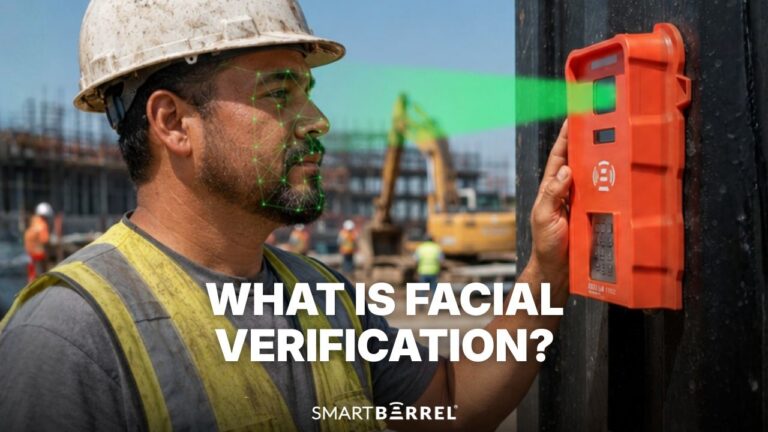
- Manpower tracking through biometric facial verification
- SMS work summary reporting
- Safety tracking, including incident and personal protective equipment tracking
- Daily logs summarizing daily work, weather observations, and incidents
- Communication tools, such as message broadcasting
- Procore integration
- Document and certification tracking
Subcontractors benefit from:
- Time tracking through biometric facial verification
- Cost code and phase tracking
- Customized round up and break rules
- PTO tracking
- Configuration of payroll rules
- A dashboard view and app reporting
Need help with managing your construction site? Request a demo with SmartBarrel today!