
Every construction site carries hidden risks that cost money when they go unnoticed. One missed delivery, one crew delay, or one communication gap can throw off the entire schedule and eat into profit. Seasoned subcontractors do not cross their fingers and hope it works out. They build clear daily systems that keep jobs moving when things get rough, and that is what keeps costs down and jobs on track.
Construction is full of moving parts: people, materials, time, weather, and paperwork. The trick is not pretending you can avoid every problem. It is spotting hidden risks early and backing up every step with clear daily logs, verified hours, and smart planning. This guide covers the tactics that let you control those risks before they control the job.
The risks that kill margin are rarely dramatic. They are unrecorded hours, unapproved change orders, late deliveries nobody flagged, and verbal agreements that cannot be proven six months later. Each one is small enough to absorb once and expensive enough to sink a job when it repeats. The control is the same in every case: a verified daily record of who was on site, what got done, and what was approved. This guide walks through seven risk areas where that record is what stands between a healthy margin and a disputed one.
What Is Risk Management in Construction?
Construction risk management is the practice of identifying the conditions that can cost you money before they do, then documenting the work well enough to prove what actually happened. It covers labor, safety, budget, schedule, documentation, technology, and subcontractor coordination. The part contractors underestimate is the documentation half: identifying a risk without a record of how the job actually ran leaves you with an opinion instead of evidence when the dispute arrives.
Construction risk management is about preparation. It means spotting hidden risks before they turn into real costs and putting clear systems in place so you can deal with problems early. You can’t plan for every curveball, but recognizing patterns and keeping daily records helps keep surprises small and profit steady.
Many daily tasks already reflect risk management. Checking weather before a pour, reviewing delivery schedules, and training crews on safety are simple steps that prevent problems. The difference is turning those habits into consistent, documented systems.
That shift from habit to documented system is close to what a strong safety culture in construction looks like day to day.
Maintaining daily site records turns routine observations into a searchable history that protects you when disputes surface months after the work is done. Clear daily logs, verified time tracking, and steady communication help teams stay in control instead of reacting after the fact.
A strong construction risk management plan covers key areas like:
Risk area | Early warning sign | Primary control |
Labor and crew availability | No-shows, late starts, hours logged after the fact | Verified clock-in with facial verification and geofencing |
Safety and compliance | Skipped toolbox talks, unlogged minor incidents | Daily safety check-in with recorded attendance |
Financial tracking and billing | Work performed before a change order is approved | Daily supervisor sign-off on hours and scope |
Scheduling and delays | Daily output slipping while weekly targets still look fine | Daily output tracking and lead-time buffers |
Documentation and communication | Decisions made verbally and never written down | Daily crew logs with timestamped photos |
Data protection and technology | Records living in one spreadsheet on one device | Cloud-based system with offline capture and role-based access |
Subcontractor coordination | Other trades missing their own start dates | Written scope and deadlines, plus backup vendor contacts |
When these parts run on real, verified data, projects run smoother. Crews know what to do, records stay organized, and hidden risks stay small.
Get Control of Your Time Tracking
What Are The Biggest Hidden Labor Risks In Construction?
The costly ones are not absenteeism, which is visible. They are the hours that get reconstructed instead of recorded: a crew that started forty minutes late, a shift rounded up at the end of the week, a worker logged on a cost code they never touched. None of those show up on a schedule, and all of them show up in job costing. The gap is not effort, it is that the system asks people to remember instead of capturing the hour when it happens.
On a job the size of a data center, those reconstructed hours add up fast, and labor is exactly where data center budgets quietly blow out.
Labor is the heart of your operation. Nothing moves forward without the right people on site and working efficiently. But labor-related construction risks are some of the biggest hidden costs contractors face. No-shows, late starts, and sloppy time tracking can throw off schedules and eat into margins fast.
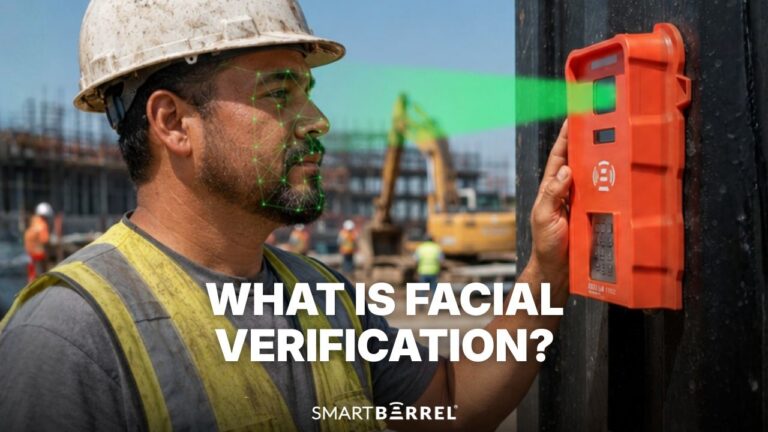
Verified time tracking closes most of that gap. Biometric facial verification and location checks confirm the right crew was on site when the record says they were, so small discrepancies get caught before they compound. SmartBarrel captures the most accurate time from the field using facial verification and geofencing, which is what makes the hours behind a job cost defensible.
But tracking alone is not enough. Daily crew planning matters just as much. Foremen should have clear task lists and check work at the end of each day. Train foremen to spot problems early and speak up fast. It is always better to shift crews in the morning than find missing hours later.
Labor risk is not about blaming workers. It is about building clear systems so you can see issues early and adjust without slowing the whole job down.
How Do Safety And Compliance Gaps Affect Your Margin?
Through stoppages and their paperwork, mostly. A single recordable incident can halt work, trigger an inspection, and add cost that was never in the bid, and the follow-up documentation lands on the same supervisors who were already running the job. The compounding factor is proof: if you cannot show who attended the toolbox talk or who was on site at the time, you spend days reconstructing an answer you should have had already.
Construction sites are busy, physical spaces, and things move fast. That is why safety has to be part of the rhythm rather than a separate task. One hazard on your jobsite can stop work, trigger inspections, and add cost you did not plan for. More importantly, safety protects your people.
Start with short, daily safety meetings. They don’t need to take long. Five minutes before the shift, with everyone checking in and signing off, is enough to keep safety in mind. Use digital attendance with facial verification (like the kind SmartBarrel provides) to confirm who was present. That way, you always have clean records.
Track every incident. Even a small cut or trip should be logged. This is not to add paperwork, but to prevent something worse next time. Run occasional surprise audits to make sure PPE is being used and rules are followed.
Managing risks in construction goes beyond checking boxes. It is about creating a jobsite where people move confidently and work at full speed without second-guessing. That is the importance of risk management in construction: protecting people while keeping the job moving.
How Do Small Time-Tracking Gaps Drain A Job Budget?
They drain it in amounts too small to trigger a review. A half hour of unrecorded overtime, one change order worked before approval, one week of hours entered from memory on Friday. Individually none of these justify a conversation. Across a crew and a full job they represent real labor cost that was either never billed or cannot be defended if it is challenged. The reason these gaps persist is that nothing flags them, since the record was never precise enough to show a discrepancy.
When you lose track of time, you lose control of your budget. Missed hours, late billing, or unapproved work all lead to one thing: shrinking margins. Often, these financial losses happen in small pieces. A few hours here. A skipped approval there. But over time, they add up and drain the job.
Verified time tracking keeps this in check. Crews log labor as it happens. Supervisors sign off daily. Everything is backed by photos, time stamps, and location checks. No chasing missing forms or arguing later about what was done.
Make sure every change order is clear and approved before work starts. If the scope shifts mid-job and nobody records it, odds are you will not get paid for that extra work.
With the right systems in place:
- You catch every hour.
- You protect every dollar.
- You stay ready for client audits with clean records.
Good construction risk management is about control. When your hours and approvals stay tight, hidden costs stay small and margins stay healthy.
How Do Construction Schedules Actually Slip?
In increments small enough that the weekly report still looks healthy. A crew short two people, a delivery arriving Thursday instead of Tuesday, a task that took a day and a half instead of a day. Weekly reporting averages those away, which is why a job can look on schedule for a month and then be three weeks late. Tracking daily output rather than weekly targets is what makes the drift visible while there is still time to recover it.
Schedules don’t usually break all at once. They slip in small ways. These include late deliveries, slow progress, and short crews. And before you know it, the project is off track. That’s why delays are one of the most dangerous risks in construction projects. They start small but hit hard.
The best fix? Stay ahead of them. Add buffer days around key items. Don’t schedule back‑to‑back tasks with no room to breathe. Track daily output, not just weekly goals. That way, if progress dips, you can catch it early and recover fast.
Daily check-ins with your crew, field supervisors, and subs can uncover problems before they blow up. And when materials are involved, always plan for a lead time buffer. Don’t wait until you’re nearly out of stock to order what’s next.
Delays do not have to derail a job. The right habits, daily tracking, clean logs, and clear comms help you adjust fast and keep the schedule tight. That is what good construction risk control looks like on the ground.
What Documentation Protects You When A Dispute Comes Up?
The records made on the day, not the ones assembled afterward. A daily crew log naming what was done, where, by whom, and when, with a supervisor sign-off and timestamped photos, carries weight because it was created contemporaneously. Reconstructed documentation does not, and everyone in a dispute knows the difference. This is the cheapest insurance available on a construction job, and it takes minutes a day.
If it is not documented, it did not happen. That might sound harsh, but it is the truth in any construction project. Verbal agreements feel quick in the moment, but they are hard to prove when issues come up. And when money is on the line, clear records are part of good construction risk management.
Start with daily crew logs. Let teams track what was done, where, by whom, and when. Add a simple signature or supervisor sign-off. Photos with timestamps help tell the full story. It does not take long, but it creates clear documentation that keeps construction risks under control.
Use one system across the job. There is less confusion and fewer delays when the field, office, and clients share the same records. Everyone can see what is happening, ask questions early, and confirm changes before they turn into bigger problems.
Good documentation and communication protect your team. They keep the construction project on track and make sure you get credit and payment for every hour and task done.
Where Do Technology And Data Security Risks Come From On A Jobsite?
From systems that were not built for field conditions. A spreadsheet works until someone overwrites it, a phone-only workflow works until the signal drops, and a shared login works until nobody can tell who entered what. Jobsite technology has to survive poor connectivity, rough handling, and turnover, and most general-purpose software was designed for none of those. Offline capture, automatic backup, and role-based access are the three features that separate a system that holds up from one that quietly loses your project history.
Most crews today use some kind of technology. But not every system is built for real construction work. A simple spreadsheet might do the job for a while, until someone deletes it, loses the file, or logs bad data. That is when construction risks show up. You do not just lose time; you lose trust, money, and project history.
Use a cloud-based system that stores records across devices and saves work automatically. If a phone breaks or someone logs out early, nothing is lost. Make sure the system works offline too. Many jobsites have poor signal, and you do not want work to stop because Wi-Fi is down.
Assign access by role. Field crews log tasks, supervisors approve, and PMs review. Everyone sees what they need and nothing more. Use automatic backups so records are always safe and easy to find.
The right systems do not add work. They remove friction. Good technology supports clear records, clean approvals, and secure backups, which is what practical risk identification looks like on a live job.
How Do You Manage Subcontractor And Vendor Coordination Risk?
By treating other trades as a schedule dependency you cannot control and planning accordingly. You cannot make another sub show up, but you can define scope and deadlines in writing, check references before bringing anyone new on, hold short recurring check-ins, and keep backup vendor contacts for anything on the critical path. The mistake is assuming a signed scope is the same as a managed one. It is the check-ins that surface a problem while there is still time to work around it.
Even when your own crew runs tight, other subs can create delays. A late team or a vendor who misses a delivery can push your whole schedule off track. That is why subcontractor and vendor coordination is one of the biggest hidden construction risks.
Set clear expectations up front. Define scope, deadlines, deliverables, and penalties. Put everything in writing. Check references before you bring in a new sub. Once work starts, hold quick check-ins to catch problems early. These meetings do not have to take long, but they help flag issues before they grow.
Always have a backup plan. Keep extra vendor contacts for critical materials or labor. You may not need them every time, but when a problem comes up, they can save the job from bigger delays.
Good construction risk management shows that third-party delays are a real threat. Construction risk analysis and regular risk assessment help you spot these gaps early and plan around them. With strong preparation, subcontractor risks stay small, and work keeps moving.
Frequently Asked Questions About Construction Risk Management
How is risk management different for a subcontractor than for a general contractor?
The exposure is different. A general contractor manages coordination risk across trades it does not employ. A subcontractor carries labor risk directly, since its margin sits almost entirely in hours worked against hours bid. That means a sub’s risk program lives or dies on the accuracy of its own labor record, while a GC’s depends more on schedule integration. A sub that documents its own hours precisely can defend its position even when the wider project goes sideways.
How often should a construction risk assessment be updated?
Reassess at every phase change, and review the daily records weekly in between. A risk register written at mobilization goes stale the moment the schedule or the crew composition shifts, which on most jobs is within the first month. The practical cadence most contractors settle on is a formal review at each phase handoff, plus a short weekly look at whatever the daily logs are showing, since that is usually where a new risk appears first.
Conclusion
You can’t stop every problem on a construction job. That’s not the goal. The real goal is to spot risk early, have a plan, and stay in control. Whether it’s labor, safety, budget, or schedule, your systems decide how well the job moves.
The best subcontractors do not get lucky. They get ready. They use tools like SmartBarrel to verify crews on site, keep daily records tight, and catch small risks before they kill your margin. That’s construction risk management in practice, real data that protects trust and keeps jobs moving. You already know how to build. Now, protect your margin with daily systems that work as hard as you do.